


Polifonic: The Art of Building a Festival with Its Own Identity
Marco Sala and Fabiola Andriolo reveal the vision behind a festival that has turned Valle d'Itria into a total cultural experience
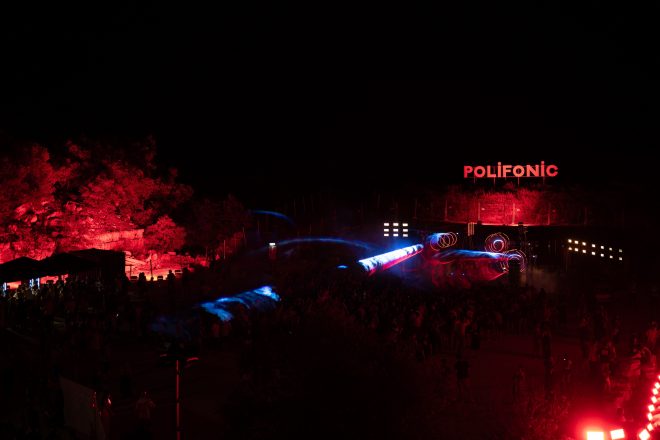
There's something I've always loved about Polifonic. I never got the sense that it wanted to be the biggest festival out there — rather, one of those rare places where context matters just as much as the music. The architecture, the light, the land, and the passage of time all seem to be part of the same composition.
After speaking with Marco Sala and Fabiola Andriolo, I understood that this feeling was no accident.
Marco comes from the clubbing world, from creating spaces where music dialogues with culture. Fabiola comes from the world of strategy and experience design, convinced that a festival can become a cultural platform far broader than a simple event. Two very different paths that today converge in a shared way of understanding things.
Over the years, the project has developed a very recognizable personality. Not just through its artistic selection, but through the way landscape, architecture, gastronomy, and music coexist. Everything seems to respond to the same vision.
Just a few days before a new edition — or perhaps while you're living it, depending on when you're reading this — we spoke with Marco and Fabiola, two of the people who make possible the complex task of building five days of festival in the heart of Valle d'Itria, a corner of southern Italy where every summer thousands of people come together to share the same passion.
A conversation about the origins of the project, the invisible work that fills the other 360 days of the year, and the delicate task of continuing to grow without losing what made Polifonic special from the very first day.
Polifonic has already become a can't-miss date on the European summer calendar. When it all began in 2017, what did you feel was missing? What was the need that led you to create the festival?
M: Hi! When we started Polifonic in 2017, Italy barely had a handful of electronic music festivals. We wanted to create something that combined our passion for music with a broader, deeper experience — an evolution of everything we'd previously lived through in clubs. Then we fell in love with Puglia, and quite naturally, all the pieces fell into place.
Beyond the music, Polifonic has always conveyed an identity deeply tied to its territory and to experience. If you had to define what Polifonic represents to you, what would you say?
F: For me, Polifonic is the place where everything converges. It's where our work and our passion meet naturally.
I've always believed that music is deeply influenced by the place where it's experienced. The environment isn't simply a backdrop; it becomes an essential part of the journey. It shapes how people listen, connect, and remember those moments long after the festival is over.
This will be my fourth edition, and I still find myself surprised, walking through the festival and watching thousands of people share that unique connection between music, nature, and the landscape around them. It's probably the most magical and rewarding part of everything we do.
Every festival has a story the public never gets to see. What was the hardest moment during the early years, and what still keeps you up at night today?
M: Absolutely. The first edition wasn't easy, and financially it was a huge challenge. Then came the pandemic years, which brought even greater difficulties: we had to shrink the team and go through a long period of uncertainty. Still, all of those experiences have shaped who we are today.
People only experience five days of festival, but behind it lies a full year of work. What does that invisible process of building Polifonic actually look like?
F: People see five days of music, but Polifonic is the result of an entire year of work. Each edition begins the moment the previous one ends, with months of planning, design, and hundreds of decisions that ultimately shape the experience the audience lives.
Building a festival in a place like Valle d'Itria makes everything even more complex. The beauty of the territory also brings enormous production challenges, so every decision means striking a balance between creative ambition, technical feasibility, budgets, sustainability, and preserving the identity of the place itself.
One of the biggest lessons I've learned is that the unexpected is part of the process. Staying calm, thinking clearly, and adapting quickly without losing sight of the goal is what really makes the difference.
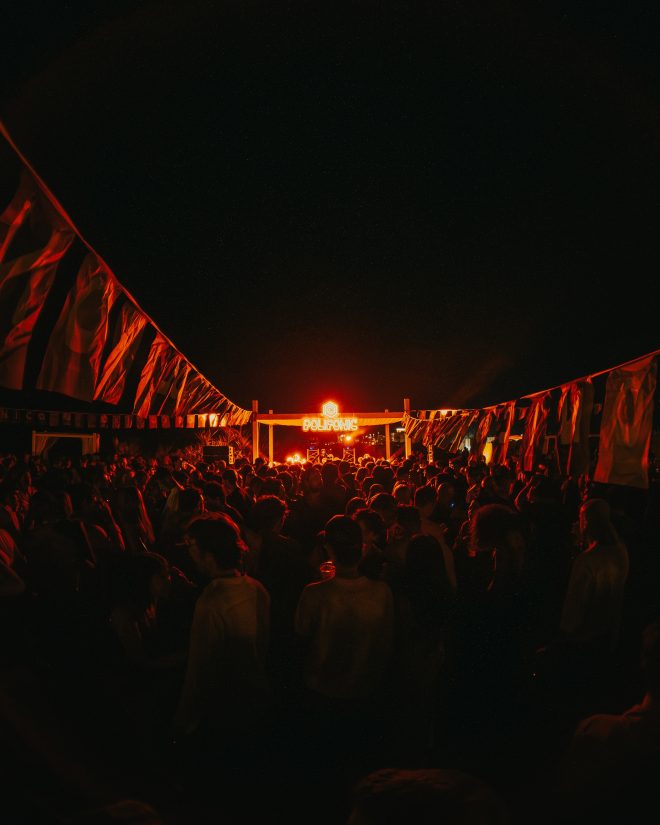
Polifonic's musical identity has always been very clear. How do you build that lineup year after year, and which artists on this edition's bill are you especially excited about?
M: We always try to present a wide spectrum of electronic music without falling into the mainstream. Our lineup is built around a balance between legendary artists, new talent, and names that, over the years, have become part of Polifonic's identity.
For this edition, I'm really looking forward to Voices From The Lake's live set, A Guy Called Gerald's live performance, the debuts of Ben UFO, Craig Richards, and Nicolas Lutz, Job Jobse's return, the back-to-back between Moodymann and Carl Craig, plus Dirty Channels, Gerd Janson, and above all, DJRUM.
Many artists return to Polifonic again and again. Do you feel that over the years you've built a real family around the festival?
M: Over the years we've built a wonderful community around the festival. Some artists have been with us since the very first editions, like Zippo, Hiver, Rudan, and Yas Reven.
Others have helped carry the Polifonic sound far beyond the festival itself, like Pascal Moscheni, Simone De Kunovich, Dirty Channels, and Der u Obee, who has performed at Polifonic regularly since 2018.
Producing a festival today involves so much more than booking a lineup. What does it take to run an independent project like Polifonic?
F: Running an independent festival today is much more complex than it was a few years ago.
The real goal is to create a coherent experience from the first contact someone has with the festival all the way to the moment they leave the site. Every detail matters.
I think the biggest challenge is growing without losing sight of the original vision. The key lies in finding the balance between artistic ambition and financial sustainability, while still improving the experience with every edition.
The relationship with the territory is just as important. The idea isn't simply to hold a festival in Puglia, but to create something that truly belongs to that place and allows Polifonic to evolve without losing its identity.
Valle d'Itria is much more than the festival's stage. What is it about this place that has become an inseparable part of Polifonic's identity?
F: Valle d'Itria has a very distinctive visual identity. The red earth, the green of the olive trees, and the white limestone masserie create a landscape that's constantly changing.
I've always been fascinated by light. Our days begin at dusk and end at dawn, so the same space conveys completely different feelings depending on the time of day. The colors change, the atmosphere changes with them, and so does the way people experience the music.
On top of that, moving between the different stages lets you discover the diversity of the territory, from the countryside to the Adriatic coast, making the journey itself part of the experience.
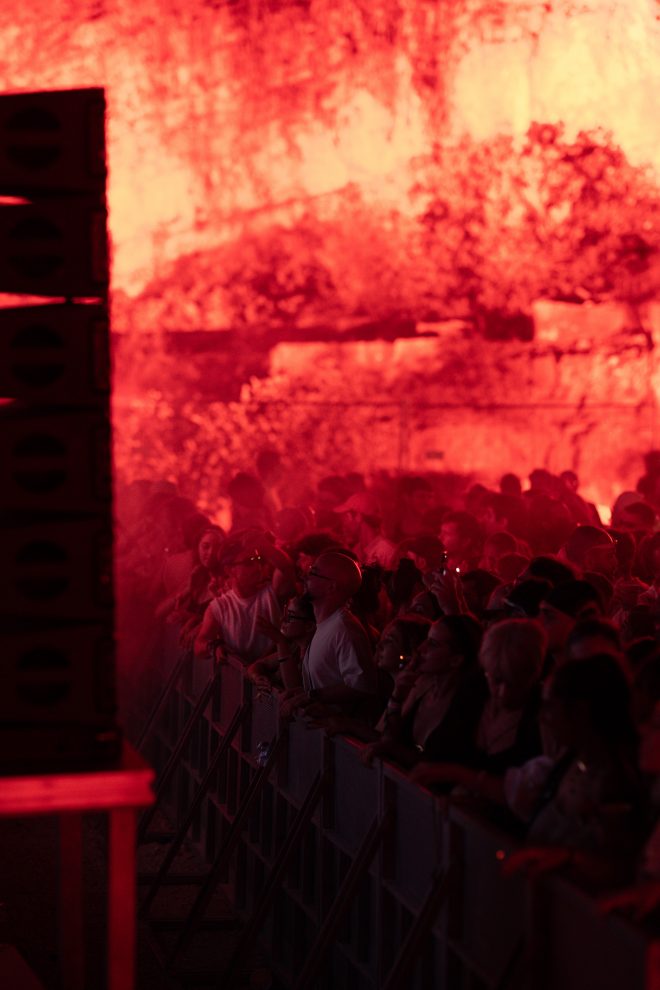
After everything you've built, what dream do you feel you've already fulfilled, and what keeps pushing you forward?
M: Our main goal was to create an international gathering in a truly special setting, and that's something we're very proud of.
Looking ahead, we'd like to keep taking this concept further and share that Mediterranean spirit both in Italy and in other countries.
Behind Polifonic there's a huge team working all year round. How do you get so many people rowing in the same direction without losing the project's essence?
F: I think the key word is balance.
Festivals speak to a very diverse audience, so the people who build them should reflect that diversity too. Bringing together people with different backgrounds, skills, personalities, and points of view leads to better conversations, and as a result, better decisions.
Even the founders themselves are very different from one another. Each brings different strengths, but we all share the same vision and a common sensibility about what Polifonic represents. That way of working naturally extends to the rest of the team.
Keeping everyone aligned doesn't mean everyone thinks alike — it means offering clear direction while leaving room for different perspectives.
As the team grows every year, so does the sense of continuity: those who already know the project pass on its culture to new members, while new additions bring fresh ideas that help us keep improving.
Today Polifonic no longer exists only during the festival. How did the idea of turning it into a year-round active project come about?
F: Over the years, Polifonic has naturally evolved into a platform active all year round, keeping its community connected while continuing to explore new ideas.
Each season we kick off our showcase tour in Paris, as part of FVTVR, before moving on to cities like London, Berlin (ELSE), Amsterdam, Barcelona, Lisbon, as well as Milan, Rome, and Naples.
Alongside this, we develop co-productions with different international projects, bringing Polifonic into new contexts and connecting with new audiences.
That continuity is essential. It lets us build lasting relationships with artists, collaborators, and attendees, while also bringing a piece of the Polifonic universe to wherever we travel.
To close, how do you picture the future of Polifonic? What would you like to keep exploring in the coming years?
M: The world is changing at an enormous speed, so we also need to keep evolving to stay relevant.
We want to keep expanding the Polifonic universe beyond the festival itself, as we've already started doing with our record label, our showcases, and side projects like MOGO Hi-Fi Bar in Milan or Cala Maka, our beach club in Puglia.
